
I kinda sorta drew a blank. It could be that I have a memory like a sieve, or the attention span of a gnat, but there are very few first lines that I can recall off the top of my head. Very few. And by "few" I mean "one."
It is a truth universally acknowledged, that a single man in possession of a good fortune must be in want of a wife.Okay, okay. I know: totally cliche, right? Other than "It was the best of times; it was the worst of times" the opening line of PRIDE AND PREJUDICE is like the most quoted opener ever. And while I was wallowing in a cesspool of my own uncreativeness (new word, sue me), I started to ask myself why this first line was so popular?
Why indeed?

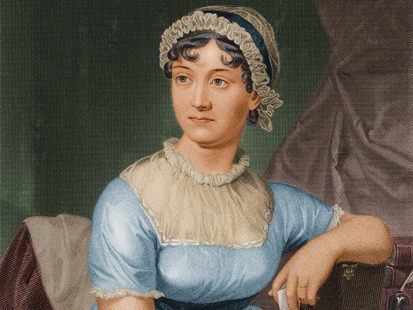
First off, it encompasses the voice of the novel pretty succinctly. You're going to get a slightly snarky (for the time), educated, observant narrator who's going to put her own spin on the events to come. Check.
Second, you're getting the basics of the plot: an overview of courtship, marriage and economics in a small English village two centuries ago. Check.
Third, it ropes you into the narrator's world. "Hey dolt! This is a truth universally acknowledged. That means by you, too. Oh, you didn't know this universally acknowledged truth? Well get on board, buddy. This train is leaving the station with or without you." Check.
Voice, plot, pulls you in. Wait, isn't that exactly what we all strive for in a first line? Isn't that the Holy Grail? Holy crap, Jane Austen knew this in 1797? BITCH!
And of course you have to consider other novels of the time period. Fanny Burney's CAMILLA:
Repose is not more welcome to the worn and to the aged, to the sick and to the unhappy, than danger, difficulty, and toil to the young and adventurous.Ah, so poetic. So romantic. So confusing. Now Ann Radcliffe's THE MYSTERIES OF UDOLFO:
On the pleasant banks of the Garonne, in the province of Gascony, stood, in the year 1584, the chateau of Monsieur St. Aubert.OMG, talking about telling. It's an opening line info dump! And don't even get me started on Laurence Sterne's THE LIFE AND OPINIONS OF TRISTRAM SHANDY:
I wish either my father or my mother, or indeed both of them, as they were in duty both equally bound to it, had minded what they were about when they begot me; had they duly consider'd how much depended upon what they were then doing;--that not only the production of a rational Being was concerned in it, but that possibly the happy formation and temperature of his body, perhaps his genius and the very cast of his mind;--and, for aught they knew to the contrary, even the fortunes of his whole house might take their turn from the humours and dispositions which were then uppermost;Notice that quote ends with a semi-colon. Semi-colon. That sentence is only half finished! I defy anyone to tell me what the hell Sterne is trying to say here, because I tuned out after word #47. Horace Walpole's THE CASTLE OF OTRANTO is one of my favorite old gothic follies, but this opener:
Manfred, Prince of Otranto, had one son and one daughter: the latter, a most beautiful virgin, aged eighteen, was called Matilda.Honestly, a beautiful 18-year old virgin? Try something a little more original, mkay? And last but not least, I've saved that pinnacle of preachy morality, Samuel Richardson's PAMELA:
DEAR FATHER AND MOTHER, I have great trouble, and some comfort, to acquaint you with.Oh no! Great trouble! She sounds so scared. Oh no wait, she doesn't. She sounds like a boring git. And please, starting your novel with a letter? How cliche is that?
I think you get my point. These novels feel so dated in their prose while Austen, she translates easily to the modern reader. She speaks to you, not over you, and treats you like a member of the Bennett family for the duration of the novel. It's a brilliant opener and one that's been stuck in my craw since I was 13. It spoke as much to me then as it does now, and that's something I think all of us strive for. Brava, Ms. Austen. Bitch.

It is a classic opening line. I love Jane Austen. I'm not so good at first lines, apart from the contemp women's fiction book. I have to admit, even though I wrote it, I love it. :D
ReplyDeleteHaha! An excellent analysis. P&P and Tale of Two Cities have the only opening lines I can quote. That might be more about my memory than anything else, though. Still, you have to heart Austen. She was the queen of snark before anyone knew what snark was.
ReplyDeleteLol--I love the bad examples in this. I was scared when I read the first one, bc I was like, um, this kinda sucks, and I thought you were trotting it out as another stellar example. Whew!
ReplyDeleteAnd don't feel bad--except for that Dickens quote, I can't remember ANY first lines. Yes, I suck.
"She was the queen of snark before anyone knew what snark was."
ReplyDeleteThat would make SUCH an awesome opening line!
Well said!
ReplyDeleteLOL - Loved these examples!!
ReplyDeleteSee, I think about this stuff and then I get this urge to email my agent and tell her to withdraw my book from all the places it's sitting prettily, so I can change the first line.
ReplyDelete/paranoia
You know, I never thought of Austen in comparison to her peers before. I'm embarrassed to admit that.
I have a special love in my heart for Pride and Prejudice. I'm a sucker for love stories, and with all this one's timeless elements, it never gets old.
ReplyDeleteActually, I just reread the annotated version by David Shapard. I learned a lot about her writing style from it (she was a fricking genius. I'm so envious) and the book itself is heaven.
Forget 'creativity.' You have excellent taste.
This was when the whole concept of 'novel' was novel (bwaha), and you can see the overtones of rhetoric and argumentation colouring these first lines. It still sorta sounds like non-fiction, albeit sweeping and maudlin non-fiction. Austen was definitely a luminary - without her and Dickens God only knows what would have happened to the novel (a hated writing format in its early days).
ReplyDeleteSick of me yet?
I did want to point out, though, that Tristram Shandy is meant to be ludicrous. The more of it you read, the greater the urge to laugh hysterically, and that can be very nice!
I love your analysis! First lines of anything -- books or even just chapters -- don't come easy to me, and this really got me thinking. Thank you!
ReplyDelete