Update! Update! Update!
Well kidlings, the update is that THE ESCAPE - my YA historical adventure spy multiple POV seafaring novel is done. DONE I SAY!
For now, at least.
I hit "SEND" yesterday and blasted that bad boy off to Rockstar Agent. Then I felt like I wanted to puke.
That's right! It never freakin' ends. First, you're stressed out that no agent will ever love your novel. Then you find an agent that loves your novel and from that point on you're stressed out that he or she will never love another of your novels ever again. It's a never-ending shitticane, people. Get used to it.
So the Escape is done. I swear it wasn't three hours later and my brain was already thinking, "What next, dillhole?" Oh shit, good question! There's a sequel, of course, but my superstitious Irish self refuses to write it until the first sells so I resign myself to self-torture, obsessing over a plot. Meanwhile I need a new project. Why? BECAUSE THAT'S HOW I AM! There's no circus going on, I've just got the one torturous semi-boring job so I need at least one more thing in my life. Oh, and NaNo is rapidly approaching. I've yet to participate in National Novel Writing Month but I thought this would be a good year to do it.
Only I need a story!
And that's where you come in lovely, lovely readers. See the pretty poll? WELL VOTE IN IT ALREADY! Seriously, I'm losing my mind over here. I can't decide which I like better and while you're not getting details, I hope these little loglines entice you towards a choice. Poll is open til next Tuesday at midnight. And even though Rockstar's opinion will outweigh all of you by...a lot, your collective Interwebz opinion means the world to me.
Help me, Seanchai readers. You're my only hope!

Wednesday, October 21, 2009
Friday, October 16, 2009
To Vlog or Not to Vlog
That is the question:
Whether 'tis nobler in the mind to suffer
The slings and arrows of outrageous vlogging,
Or to take arms against a sea of vloggers,
And by opposing end them?
I'm being dramatic again. I know it. Can't help myself, though. It's in the blood. Opera and circus, remember?
Okay, so the point is that in the near future I'll be doing a weekly video blog in association with a new Vlog Chain of YA writers, tentatively known as the YARebels. I've been told the hard and fast rules are:
1. No F-Bombs (which, for any of you who actually know me, will be hard as hell for me to stick to) and
2. The Girls have to stay holstered (which, for any of you who actually know me, is really more of a logistical issue than an exhibitionist one.)
I'll shell out some more details as they become available. I know you'll all be atwitter...


Tuesday, October 13, 2009
Show vs. Tell - a Blog Chain
Several of my writerly friends and I decided do to a join/group/chain blog today with our own interpretations of - and riffs on - the age-old Show vs. Tell debate in writing.
A refresher course, for those of you who have no f'n clue what I'm talking about. Showing the reader something - a trait, an emotion, a quirk, an event - brings the reader into your world, a participant, a thinking member of the novel so to speak. Telling the reader the same bit of information is just that: the writer telling the reader.
Example:
Get it? Yay.
Show vs. Tell has become the battle cry of the struggling writer. Every "How to Write a Novel!" has Show vs. Tell as one of its first lessons and I'll be the first to admit that it was a lesson I desperately needed to learn (and still require the occasional refresher course on). But I'm here to espouse a radical, mind-blowing idea.
Wait for it. Wait for it.
Sometimes, you need to tell instead of show.
BLASPHEMY! HERESY! Yeah, yeah, I know. Don't get your panties all in a wad. All I'm saying is that there are occasions - rare, yes - that the author really just needs to tell you something and then get on with the rest of the showing. Sometimes we don't want or need to be shown and I find myself reading a scene in a book thinking "Did this really need to be a scene? Couldn't you just tell me that this already happened and move on?"
As benign as my example was above, larger more structural variations of Show vs. Tell occur when the writer needs to tell us that something has happened in a story - either during the action or before it - but doesn't want to make a whole scene out of it because it will interrupt the flow of the narrative.
To take a popular example, I'll go with Elizabeth Bennett discovering via her sister Jane's letter that her other sister, Lydia, has just eloped with the odious Mr. Wickham. (Oh shit, did I just ruin Pride and Prejudice for you? Oops! But maybe you should pull your head out from under that rock and read the novel, mkay?)
Sidetracked. Anyway, Austen could have shown us these events, writing a whole scene with Wickham seducing the little nympho (or maybe the other way around?), fleeing for London in the middle of the night, etc. etc. But that's not Elizabeth's story and Pride and Prejudice is very much Elizabeth Bennett's story. So we get a letter telling us what has happened - artfully, skillfully - and then we get on with the aftermath of that event and how it effects Elizabeth.
I've got a point hidden in here somewhere. Basically, its very easy to point out every example of a tell when reading a novel. But sometimes, you need to weigh the effect of that tell versus its comparable show and realize maybe the author knows what they're doing. From time to time.
Want to read some other writers' take on this subject? Check out:
A refresher course, for those of you who have no f'n clue what I'm talking about. Showing the reader something - a trait, an emotion, a quirk, an event - brings the reader into your world, a participant, a thinking member of the novel so to speak. Telling the reader the same bit of information is just that: the writer telling the reader.
Example:
Jimmy picked at the rough, scabbing skin around his thumbnail and kept his eyes fixed on his desk as Sister Perpetua slowly marched down the aisle - ruler-of-death in hand - searching for spitballing perpetrator. He felt his forehead break out in a damp veil of perspiration and prayed blasphemously to God that he wasn't, at that very moment, blushing a deep shape of tomato red.Hopefully, I'm showing you that Jimmy's guilty and scared to death he'll be found out. Versus:
Jimmy was really scared that Sister Perpetua would know it was him who shot the spitball at the back of her habit.Okay, obviously its a clunkier version, not nearly as poetic or descriptive. But what's also obvious is that I'm telling you that he's nervous instead of showing it through his thoughts and/or actions.
Get it? Yay.
Show vs. Tell has become the battle cry of the struggling writer. Every "How to Write a Novel!" has Show vs. Tell as one of its first lessons and I'll be the first to admit that it was a lesson I desperately needed to learn (and still require the occasional refresher course on). But I'm here to espouse a radical, mind-blowing idea.
Wait for it. Wait for it.
Sometimes, you need to tell instead of show.
BLASPHEMY! HERESY! Yeah, yeah, I know. Don't get your panties all in a wad. All I'm saying is that there are occasions - rare, yes - that the author really just needs to tell you something and then get on with the rest of the showing. Sometimes we don't want or need to be shown and I find myself reading a scene in a book thinking "Did this really need to be a scene? Couldn't you just tell me that this already happened and move on?"
As benign as my example was above, larger more structural variations of Show vs. Tell occur when the writer needs to tell us that something has happened in a story - either during the action or before it - but doesn't want to make a whole scene out of it because it will interrupt the flow of the narrative.
To take a popular example, I'll go with Elizabeth Bennett discovering via her sister Jane's letter that her other sister, Lydia, has just eloped with the odious Mr. Wickham. (Oh shit, did I just ruin Pride and Prejudice for you? Oops! But maybe you should pull your head out from under that rock and read the novel, mkay?)
Sidetracked. Anyway, Austen could have shown us these events, writing a whole scene with Wickham seducing the little nympho (or maybe the other way around?), fleeing for London in the middle of the night, etc. etc. But that's not Elizabeth's story and Pride and Prejudice is very much Elizabeth Bennett's story. So we get a letter telling us what has happened - artfully, skillfully - and then we get on with the aftermath of that event and how it effects Elizabeth.
I've got a point hidden in here somewhere. Basically, its very easy to point out every example of a tell when reading a novel. But sometimes, you need to weigh the effect of that tell versus its comparable show and realize maybe the author knows what they're doing. From time to time.
Want to read some other writers' take on this subject? Check out:
and
Monday, October 12, 2009
Monday Culture
My friend Miss Cari Ann Shim Sham asked today via Facebook status update: "What's your favorite piece of classical music?"
I don't even need to bat an eye to answer that one. Chopin's Ballade No. 1 in G minor, Op. 23. Hands down. Lights out. Game over. For some reason, this gorgeous piece speaks to me, fills my heart with ache and longing, makes me all swoon-googly. Don't roll your eyes at me. I defy you not to be swoon-googly at about the 5:50 mark...
So I thought I'd share it with you on this holiday/not-a-holiday Monday morning.
This is the master Vladimir Horowitz live at Carnegie Hall from his famous television debut in 1968, aired by CBS. The opening of the clip is a little fussy, but its A-OK once the piece starts and the audio hasn't been remastered, but very few pianists have lived this piece quite like Horowitz did. Enjoy.
Tuesday, October 6, 2009
First Line Envy
A question went around in a writers' group to which I belong: What is your favorite first line from a novel?
I kinda sorta drew a blank. It could be that I have a memory like a sieve, or the attention span of a gnat, but there are very few first lines that I can recall off the top of my head. Very few. And by "few" I mean "one."
It is a truth universally acknowledged, that a single man in possession of a good fortune must be in want of a wife.Okay, okay. I know: totally cliche, right? Other than "It was the best of times; it was the worst of times" the opening line of PRIDE AND PREJUDICE is like the most quoted opener ever. And while I was wallowing in a cesspool of my own uncreativeness (new word, sue me), I started to ask myself why this first line was so popular?
Why indeed?
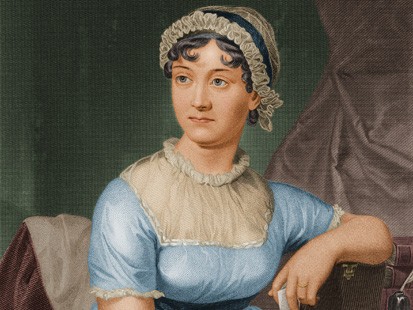
First off, it encompasses the voice of the novel pretty succinctly. You're going to get a slightly snarky (for the time), educated, observant narrator who's going to put her own spin on the events to come. Check.
Second, you're getting the basics of the plot: an overview of courtship, marriage and economics in a small English village two centuries ago. Check.
Third, it ropes you into the narrator's world. "Hey dolt! This is a truth universally acknowledged. That means by you, too. Oh, you didn't know this universally acknowledged truth? Well get on board, buddy. This train is leaving the station with or without you." Check.
Voice, plot, pulls you in. Wait, isn't that exactly what we all strive for in a first line? Isn't that the Holy Grail? Holy crap, Jane Austen knew this in 1797? BITCH!
And of course you have to consider other novels of the time period. Fanny Burney's CAMILLA:
Repose is not more welcome to the worn and to the aged, to the sick and to the unhappy, than danger, difficulty, and toil to the young and adventurous.Ah, so poetic. So romantic. So confusing. Now Ann Radcliffe's THE MYSTERIES OF UDOLFO:
On the pleasant banks of the Garonne, in the province of Gascony, stood, in the year 1584, the chateau of Monsieur St. Aubert.OMG, talking about telling. It's an opening line info dump! And don't even get me started on Laurence Sterne's THE LIFE AND OPINIONS OF TRISTRAM SHANDY:
I wish either my father or my mother, or indeed both of them, as they were in duty both equally bound to it, had minded what they were about when they begot me; had they duly consider'd how much depended upon what they were then doing;--that not only the production of a rational Being was concerned in it, but that possibly the happy formation and temperature of his body, perhaps his genius and the very cast of his mind;--and, for aught they knew to the contrary, even the fortunes of his whole house might take their turn from the humours and dispositions which were then uppermost;Notice that quote ends with a semi-colon. Semi-colon. That sentence is only half finished! I defy anyone to tell me what the hell Sterne is trying to say here, because I tuned out after word #47. Horace Walpole's THE CASTLE OF OTRANTO is one of my favorite old gothic follies, but this opener:
Manfred, Prince of Otranto, had one son and one daughter: the latter, a most beautiful virgin, aged eighteen, was called Matilda.Honestly, a beautiful 18-year old virgin? Try something a little more original, mkay? And last but not least, I've saved that pinnacle of preachy morality, Samuel Richardson's PAMELA:
DEAR FATHER AND MOTHER, I have great trouble, and some comfort, to acquaint you with.Oh no! Great trouble! She sounds so scared. Oh no wait, she doesn't. She sounds like a boring git. And please, starting your novel with a letter? How cliche is that?
I think you get my point. These novels feel so dated in their prose while Austen, she translates easily to the modern reader. She speaks to you, not over you, and treats you like a member of the Bennett family for the duration of the novel. It's a brilliant opener and one that's been stuck in my craw since I was 13. It spoke as much to me then as it does now, and that's something I think all of us strive for. Brava, Ms. Austen. Bitch.
Wednesday, September 30, 2009
My Own Personal Office Space

As much as I loathe bumping those gorgeous blue eyes off the top of my blog, I suppose its time for a new post. Today's TOC? Characters.
I know that as a writer (and that, ladies and gentlemen, is like the first time I've really self-identified as a "writer"... thank you Jessica Morgan ...). Wait, where was I? Oh yes.
As a writer, I cannibalize people and places from my life and shove them into my novels. I can't help it, really. For characters, I find myself taking a dash of this person combined with 2 Tablespoons of that person and just a dollop of that barrista at the Westwood Peet's, shake and pour over ice for a perfect Character Cocktail. It's never so much of any one person so as to be recognizable.
Until now.
I'm writing kind of an office place comedy and those of you who follow me on Twitter, you know exactly what a whackadoo shit show my day job office can be. And you know I'm sticking these people in my novel. I have to. They'll be loving recreations (mostly) and not absolute carbon copies, but they should be easily identifiable.
 I don't want to hurt anyone's feelings, but at the same time they are just too goddamn entertaining not to be fictionalized. Seriously - the blind albino who bears more than a passing resemblance to Milton here, the Holocaust survivor who falls asleep at her desk every day, the old guy with Tourette's Syndrome, the post-op tranny. I AM NOT MAKING THIS UP, PEOPLE!
So for those of you who write, how do you feel about putting people you know in your novels? Do it? Don't do it? Do it without realizing you're doing it like Senator Larry Craig in the men's room of the Minneapolis-St. Paul airport? Do you ever worry that someone you know personally is going to "see" themselves in one of your characters and totally flip the hell out? Or is that just part of being a writer - doing what you need to do, damn-the-torpedoes-full-speed-ahead style?
Friday, September 25, 2009
You know what I need on a Friday?
I don't know about you guys, but I could use a little Daniel Craig on my Friday.


That's all. You can go on about your business now.
Thursday, September 24, 2009
Coming Up for Air
I've been drowning in edits. Good edits. The kind that take a sloppy, nonsensical mess of a story and polish it up into something purty. The kind that remind you why its okay to write shitty first drafts, the kind that takes a million scattered bits of light and gives them focus, the kind that reminds you The Writer that this isn't just a creative process, it's a calculated, thinking process.
Somehow, to me at least, that's all very comforting.
I write shitty first drafts. My mantra, thanks to Cindy Pon, is "I am allowed to write utter poo." And I do. BOY do I. Some chapters are better than others - more fully formed, more character infused, more rational. Some are little more than fleshed out bullet points with a dab of description here and there, like spackle on a wall to cover up that hole where you ripped the plaster off trying to hang the framed Ricky Jay poster without a wall stud.
Or maybe that's just my house.
Back to the poo. The first draft of The Escape was very poo-y. Chapters 15 and 16 I could practically smell through my computer screen and I swear to God I had flies trying to land on my laptop while I was writing them. It was pooier than The Witch's Eye, I think, because of the historical setting. (By the way, dear readers, please remind me never to write a historical novel again, okay? Okay.) Therefore, by the transitive property of poo, the edits for the second draft have been rough. Tough. Painful sometimes. But they are progressing, and once in awhile, I can even see a little glimpse of the finish line, a glimmer in the distance of what this novel could be.
Now I just have to get there.
Tuesday, September 15, 2009
Interview with GIVE UP THE GHOST's Megan Crewe!
I'm so honored to be conducting an interview today over at the Enchanted Inkpot with fellow Inkie Megan Crewe, who's debut novel GIVE UP THE GHOST is on shelves now at a Barnes & Noble (or Chapters/Indigo if you're in Canada) near you!
 A little bit about GIVE UP THE GHOST:
Cass McKenna much prefers the company of ghosts over "breathers." Ghosts are uncomplicated and dependable, and they know the dirt on everybody... and Cass loves dirt. She's on a mission to expose the dirty secrets of the poseurs in her school.And now a tease of the interview, which you can read in full here!
But when the vice president of the student council discovers her secret, Cass's whole scheme hangs in the balance. Tim wants her to help him contact his recently deceased mother, and Cass reluctantly
agrees.
As Cass becomes increasingly entwined in Tim's life, she's surprised to realize he's not so bad--and he needs help more desperately than anyone else suspects. Maybe it's time to give the living another chance...
GM: I noticed that you have a GIVE UP THE GHOST soundtrack on your website. As a musician myself, I'm always interested to know what kind of a role music plays in your writing, your story, etc.Awesome author. Awesome book. Awesome interview. :D
MC: I mostly used the music for mood. I listened to Lisa Germano's Geek The Girl and The Dresden Dolls' self titled album while I was brainstorming and writing the novel because that's the sort of music Cass would like. It helped me get into that outsider, non-conformist, critical mind-set. And writing in first person, it was particularly important to feel that I understood what would be going on
in Cass's head.
Subscribe to:
Posts (Atom)